

 Utah’s VPN law debate shows how quickly app-based privacy can become part of a broader policy fight.
What is the Utah VPN law issue?
Utah’s VPN law debate centers on age-verification enforcement and whether websites can be held responsible when users appear to mask their location with a VPN. The bigger privacy lesson is simple: when laws and platforms start treating VPNs as a loophole, app-based privacy becomes easier to target.
Utah’s VPN law debate is not just a Utah story. It is a warning about where online privacy arguments are heading. When age-verification rules, location checks, app stores, websites, and VPNs collide, ordinary users are often left trying to figure out what still works and what is suddenly restricted.
That is why this moment matters for households. App-based privacy works best when every device can install and run the right app. But most homes do not work that way anymore. Smart TVs, streaming sticks, tablets, consoles, work laptops, guests, and kids’ devices all create a messier reality.
We have already seen similar patterns outside Utah. In the UK, age-verification rules created a broader conversation about household privacy and router-level protection in our UK VPN router household privacy explainer. In Australia, the reaction to age-verification rules showed how quickly users turn to VPNs when access rules change.
Why Utah matters beyond one state
VPNs become policy targets
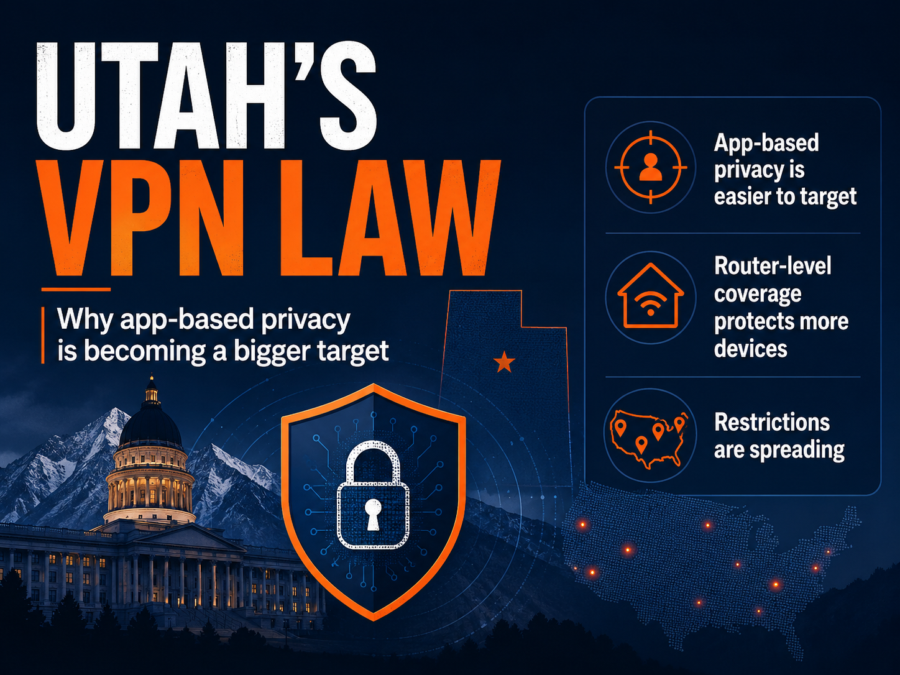
The debate shifts from “Should users verify age?” to “Should VPN-masked traffic be treated differently?”
Apps are easier to pressure
App stores, platforms, and websites can all become chokepoints for app-based privacy tools.
Households are multi-device
One app on one phone does not solve privacy for TVs, consoles, streaming boxes, tablets, and shared devices.
Source context: EFF’s Utah VPN law update, TechRadar’s reporting on Utah and VPN restrictions, and the Utah App Store Accountability Act amendments.
For privacy-minded users, the problem is not only whether one specific law is delayed, challenged, or rewritten. The bigger problem is that VPN apps are increasingly being discussed as something platforms should detect, restrict, or treat as suspicious.
That connects directly to location-detection problems. Websites and apps do not rely on IP address alone. They may also use DNS behavior, cookies, account history, app data, and device context. We break that down in How Websites Detect Your Location Beyond IP Alone.
Streaming devices create another example. If a Smart TV app, streaming stick, or game console cannot install the privacy tool you use on your phone, app-based privacy becomes uneven. That is also why guides like fixing “not available in your region” on TV abroad matter for real households.
What changes when VPN restrictions increase?
An app VPN is useful, but it depends on the app being available, installed, allowed, updated, and enabled on each device. A router-level VPN is different: it creates a more consistent network layer for compatible devices in the home.
What a router-level VPN can and cannot do
A router-level VPN is not a legal workaround and should not be treated as one. It is a privacy and network-consistency tool. It can help protect compatible devices across the home, but it does not override laws, platform rules, account restrictions, GPS signals, or age-verification requirements.
Can help protect more devices
Useful for households with TVs, consoles, tablets, streaming sticks, and guests.
Can reduce app-by-app dependence
Privacy does not have to rely on every person installing and enabling the right app.
Cannot override every signal
Account region, app history, device settings, GPS, and platform rules may still matter.
Build privacy around the household, not just one app
If your privacy setup depends on every device running a separate VPN app, it is more fragile than it needs to be. Start by matching your VPN provider, home size, and device mix to the right router setup.
Good fits for whole-home privacy coverage
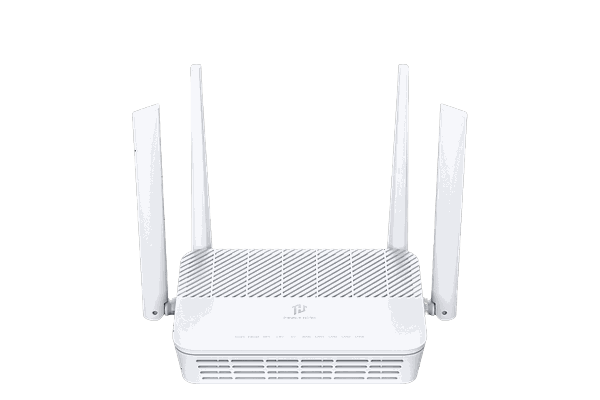
Privacy Hero 2
A simpler route for whole-home VPN coverage and easier device-by-device control.
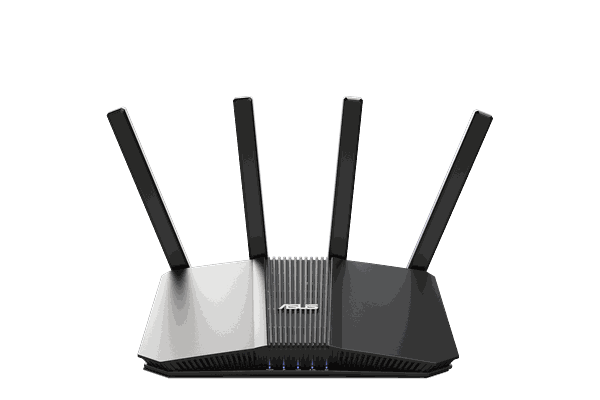
ASUS BE58U
A practical WiFi 7 option for everyday privacy, streaming, and multi-device homes.
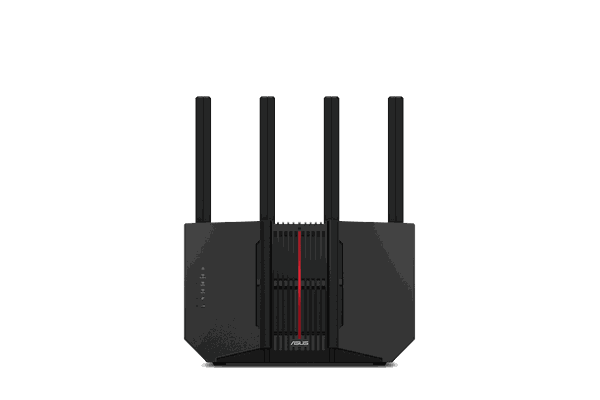
ASUS BE92U
A stronger step up for larger homes, heavier device loads, and premium WiFi 7 coverage.
The Utah story also connects with a broader support and reliability issue. If your privacy depends on the router, then the router itself should be current, supported, and appropriate for your device load. That is the same theme behind our coverage of why long-term router support matters.
If your current router is aging, unsupported, or unclear, review our explainer on end-of-life router security risk. Privacy starts with the network foundation, but that foundation needs to be trustworthy too.
FAQ
What is the Utah VPN law?
The Utah VPN law debate refers to age-verification enforcement rules that raised questions about websites, VPN-masked location, and whether VPN use can be treated as part of compliance enforcement.
Does a VPN router bypass age-verification laws?
No. A VPN router should not be treated as a legal workaround. It is a privacy and network-consistency tool, but it does not override laws, account rules, platform restrictions, or verification requirements.
Why does app-based privacy become easier to target?
App-based privacy depends on each device being able to install, update, and run the right app. If platforms, websites, or app stores restrict that app, privacy becomes more fragile.
Why use a VPN router instead of only VPN apps?
A VPN router can create a more consistent network layer for compatible devices across the home, including devices that do not easily run VPN apps, such as many Smart TVs, consoles, and streaming boxes.

BEST VPNs OF 2026
#1

#2

#3
