

Verizon Fios setup guide
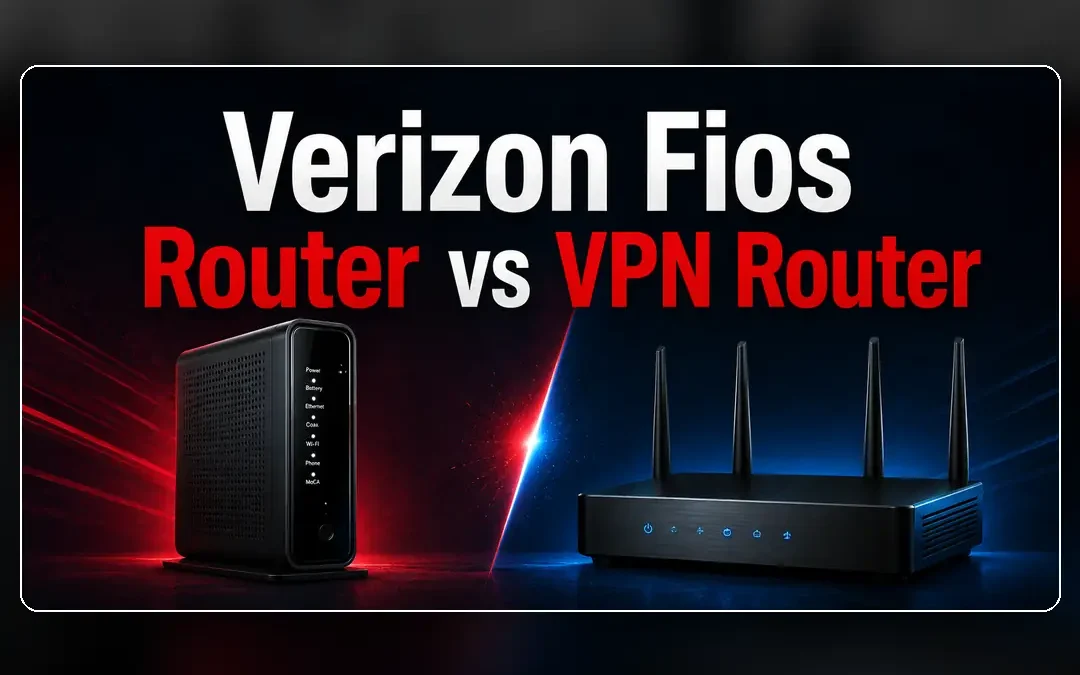
Verizon Fios Router vs VPN Router: Keep It, Replace It, or Add a Second Router?
Verizon Fios gives you a fast fiber connection. The harder question is whether the Verizon router should run your whole home network—or whether a VPN router should handle some or all of it.
Fios is one of those internet services where the raw connection is often the easy part. Fiber comes into the home, the Optical Network Terminal (ONT) converts that signal, and the router takes over the home network. The complication starts when the Verizon router is doing more than WiFi.
A lot of Fios homes also use coax for MoCA networking, Verizon extenders, or TV hardware. That does not mean you are locked into the Verizon router forever. It does mean that “just replace the router” can be bad advice when nobody has checked what else depends on it.
For VPN users, the practical goal is usually simpler: get router-level VPN coverage onto smart TVs, streaming boxes, consoles, work devices, or an entire private WiFi network without turning a working Fios setup into a weekend project.
Start with the Fios topology, not the router brand
Verizon describes the ONT as the device that converts the incoming fiber signal for internet, TV and voice. In many current internet-only installations, Ethernet runs from the ONT to the router. That is the cleanest scenario for using your own router.
The wrinkle is coax. Verizon still supports MoCA 2.5 equipment and extenders that use coax or Ethernet backhaul. If your home uses those pieces, the Verizon router may be participating in more than basic WiFi.
Before changing anything, identify three things: whether the ONT-to-router handoff is Ethernet, whether Fios TV or Verizon media hardware is present, and whether any extenders or rooms depend on MoCA. Those answers tell you how aggressive you can be.
Three practical ways to set it up
| Setup | Best when | Tradeoff |
|---|---|---|
| Keep the Verizon router only | You want Verizon-managed WiFi and do not need router-level VPN | Simplest support path; no VPN client layer for no-app devices |
| Add a second VPN router | You want VPN WiFi for selected devices without disturbing Fios | Two networks; possible double NAT for devices behind the second router |
| Use your own router as primary | Internet-only or simplified Fios setup with Ethernet handoff | You take over WiFi/routing and must account for TV, MoCA or extender dependencies |
What a VPN router adds in this setup
On Fios, the VPN router becomes the place where you decide which devices leave through the VPN and which stay on the ordinary Verizon path. That is especially useful for living-room hardware: smart TVs, Apple TV/Roku/Fire TV devices, consoles and anything else that does not handle a native VPN app gracefully.
You do not have to turn the whole house into a VPN network. A separate SSID can be the simpler design: normal Fios WiFi for everyday devices, VPN-router WiFi for the devices that actually need it.
What changes if you have Fios TV or MoCA?
This is the part generic “use your own router” articles tend to skip. Verizon’s current ecosystem still includes MoCA 2.5 adapters and extenders. If coax is carrying network traffic around the house, removing the Verizon router can also remove a piece of that path.
The safer approach is to preserve what is already working, add the VPN router over Ethernet, and move only the devices that need VPN routing onto the new network. You can always simplify the topology later once you know what depends on what.
Do not break MoCA to solve a VPN problem
If Fios TV, coax networking or Verizon extenders are working today, preserve them first. Add the VPN router over Ethernet, confirm the devices you care about work, and only then decide whether removing Verizon hardware is worth the extra cleanup.
Best setup by use case
Internet-only Fios household
Consider making your own router primary if the ONT hands off Ethernet and you do not rely on Verizon networking extras.
Fios TV / MoCA household
Keep the Verizon router initially and add a second VPN router. It is much easier to prove the VPN setup works before touching TV or coax dependencies.
Streaming-heavy household
Put smart TVs and streaming boxes on the VPN router while phones and everyday devices can remain on the normal Fios network.
Work-from-home setup
A separate VPN-router network can keep work hardware on a predictable path without changing the rest of the house.
Choose the least disruptive path first
Add VPN coverage without turning Fios into a science project.
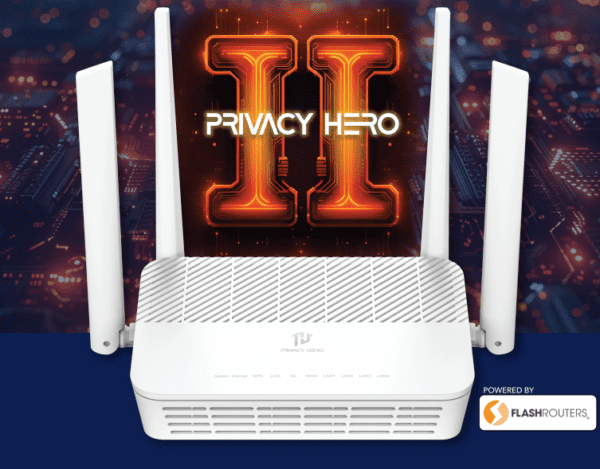
FlashRouters supports both main-router and dual-router paths. Start with your ONT, TV and MoCA dependencies, then choose the least disruptive layout.
Dual-Router Setup Browse VPN Routers Router QuizFrequently asked questions
Can I use my own VPN router with Verizon Fios?
Yes. The exact layout depends on whether your ONT hands off Ethernet and whether Fios TV, MoCA, or Verizon extenders are part of the home network.
Do I need the Verizon router for Fios Internet?
Not always. Internet-only Fios customers with an Ethernet handoff can often use their own router, but TV, MoCA, and extender dependencies should be checked first.
Can I put a VPN router behind the Verizon router?
Yes. That is often the least disruptive way to add router-level VPN coverage for selected devices while leaving the existing Fios network alone.
Will a second router slow down Fios?
It can add another routing layer, but practical speed depends more on the second router hardware, VPN protocol, server, Ethernet links, and WiFi conditions. A fast Fios plan does not guarantee the same speed through an encrypted VPN tunnel.
Provider references
Provider features and setup options can change. These are the current official references used for this guide:
BEST VPNs OF 2026
#1

#2

#3
